
Niseema Dyan Diemer LMT, SEP
Connie Shannon
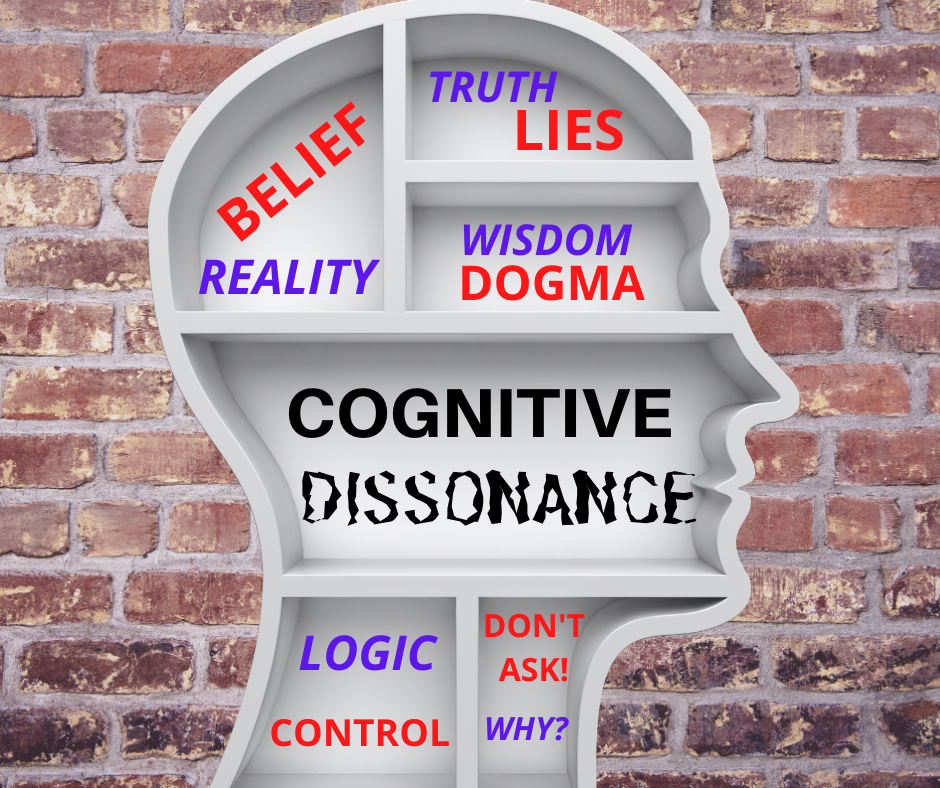
As people, humans, we are stubbornly loyal to our way of thinking. A lot of time, effort, justification and emotions are invested into establishing parameters and values that define you to yourself and the outside world. But what happens when another piece of information or fact bumps up against that belief, making you uncomfortable and challenging your "core"? That discomfort is called Cognitive Dissonance.
When your mind is at war with itself you will seek safety, security and yet may not find it, even in what you once thought was "right", now it seems "wrong". Fear, anger and strong emotions and beliefs become entangled.
There are two ways we humans use our brains to deal with the discomfort of having opposing ideas exist simultaneously. One is to "un-see": shut out the thought/idea by tuning out all information perceived as a threat. "This is the way it has always been." "If ain't broke don't fix it." "Why ask why?"
The other is harder, more of a challenge to our deepest selves but the more rewarding: "seeing" how can you change. How to admit your personal dissonance and examine the sources of of your beliefs and the new information saying "I am going to resolve this."
Which discomfort are you willing to live with? Is it more costly to hold on to your old ideas or to see another side, even if you don't agree with it completely.
It is an act of courage to change a personal opinion, to weigh fact over emotion, to open up to someone else's perspective and to share your own insights. To admit you were wrong, to come into a more peaceful place where strength is from the heart, not the will to be right.
In this week's show we explain how Cognitive Dissonance can be a positive in your life. How it urges you to grow emotionally, spiritually and collectively in this era of division and hard lines and even harder conversations.